What's Eating Us? The Stuff, Consumer Culture, and LLMs


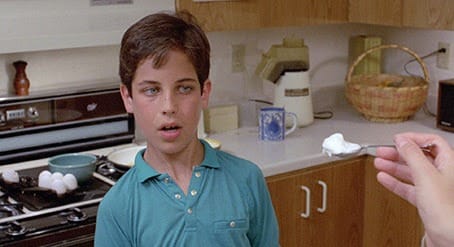
Back in the mid-’80s, Larry Cohen made an over-the-top body horror riff on The Blob called The Stuff, where unsuspecting Americans discover a mysterious white goo bubbling out of the ground that turns out to be both delicious and malevolently sentient. Once you eat it, it takes you over, and you end up puking it on your friends and neighbors until everyone is under its malicious control. (Of course, there's one kid who knows what's really going on, and nobody believes him.)
It’s one of those ridiculous “horror comedy” movies that filled video store shelves to groaning back in the video rental days. The preposterous dialogue is a scream (take-home line: “You know, if this stuff is bubbling out of the ground like this, there might be enough of it here that we could sell to people!”), the effects are cheap beyond belief—it really feels like Cohen was trying to make shaving cream seem scary—but The Stuff does have something to offer.
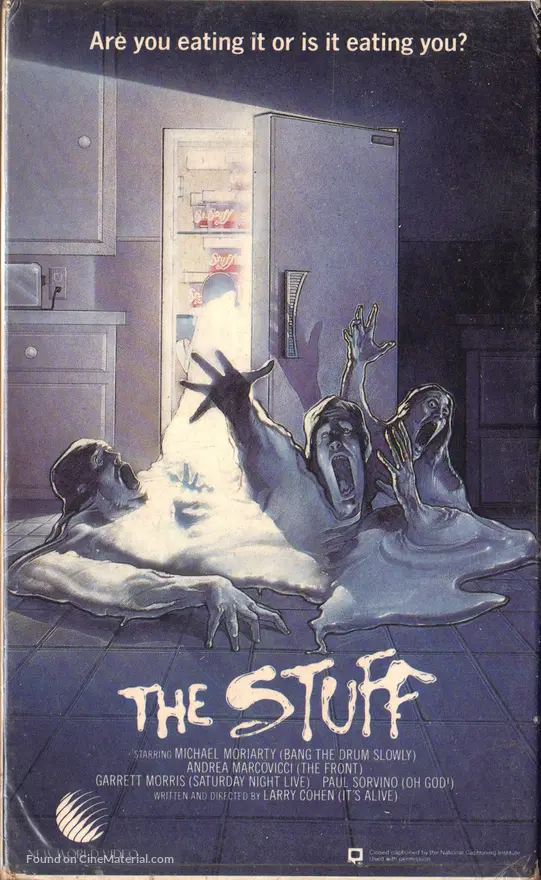
True to form as a sci-fi-adjacent tale, the movie metaphorically taps into the social issues of its time; in this case, the white goo could be seen as a stand-in for, say, crude oil, or mindless American consumerism and junk culture.
I’ve always read it a bit more literally. Specifically, white Americans had a fear of yogurt.
Stick with me.
In the American ‘80s, food became a reliable symbol for the exotic and grotesque; think of the Caucasian nose-wrinkling when Molly Ringwald breaks out her sushi lunch in The Breakfast Club. Or if you want to get spectacularly racist and postcolonial, recall the banquet sequence in Indiana Jones and the Temple of Doom, where eyeball soup and chilled monkey brains served as my introduction to Indian cuisine.
It’s no wonder I never tried malai kofta until I was well into my college years.

Back in Reagan’s suburbia, when yogurt began to proliferate in dairy cases, our first reaction was, what the hell is this? George Carlin had a great riff about it in his “fussy eater” routine: “To this day, I can still not eat… yogurt, yogurt. It sounds like it’s coming up again. Yogurt, yogurt. I can’t eat anything with a Y and a G in it.”
Then we found out it was alive.
Surely, we thought, no culture on earth could possibly tolerate, never mind enjoy, such a disgusting substance.
Cohen’s goopy VHS horror reflects that exceptionalist xenophobia, the same way that Dracula was an effective symbol of the Victorian fear of the Slavic Other, and the Pod People offered a useful representation of The Red Menace. The Stuff, as the goo comes to be called once a marketing team is brought in to package and sell it, is, at once, a metaphor for the Asian cultural influences that seemed to be “bubbling up out of nowhere” in the postwar suburbs, and a vehicle for a sharp critique of American consumers themselves, who seemed intent on gobbling up the latest sophisticated status symbol or health-food craze even as the stuff was literally gobbling them up from the inside. (That The Stuff is “Low In Calories and Good Tasting” makes it even funnier.)
Perhaps this is a classic example of Gen X overthinking. I’ll admit that. After all, it is just a crappy Wednesday night two-for-one horror rental that you’d watch once (back to back with, say, Inseminoid or C.H.U.D.) and move on.
But I think The Stuff is an apt symbol to revive, to help me explain how I feel about The Slop.
I feel like the kid fr0m the movie, running around in the grocery store, knocking over stacks of The Stuff.
That’s not really good enough in the increasingly-CSI world of today’s schools, where it seems like much of an English teacher’s time is spent in forensic investigation rather than assessment. I need to be able to prove that a student outsourced his work. I need evidence. Increasingly, I am sick of that role. I don’t want to spend the twilight of my career as Ronan the Accuser.
But that’s not why I’m thinking about The Stuff.
I’m thinking about the early days, back in 2023, when I was teaching a creative writing class in Prague, and my tech coordinator came to me to talk about this miraculous new program that could write an essay in 30 seconds that seemed like it was written by a person. I remember literally hitting my head on the desk.
"It's over," I said. "I give up."
My friend seemed excited, though—the way any dude who is witnessing a "disruptive technology" gets excited. Their eyes light up. I could see him imagining all the suffering he'd endured in English class vaporizing at the tap of a trackpad.
"It's just like when they introduced calculators into math classes!" he chirped. "Who even knows if we'll need to teach writing any more?"
How prescient that question was.
The first LLM–enshittified piece of student writing I encountered was, of all things, a personal reflection on writing workshop, where the student was meant to explain how sharing her work with others had helped her improve as a writer. I was three sentences in, moving right along, when it struck me that the reflection did not contain a single detail that showed attendance to the actual class. It was, like all LLM bullshit, a prediction of what someone who went to a writing workshop would say if you asked her what she learned. “Creative writing wasn’t just a class, it was an experience.” Etc. etc.
The floodgates opened after that.
How did we get here? One way to think about it is what professor Trevor Harding calls the "techological detachment syndrome:" that is, when there's tech involved, students don't percieve their choices as choices. Instead, if the computer or phone makes "the answers" available, whether they're correct or not, students don't consider seeking those answers as lacking in integrity.
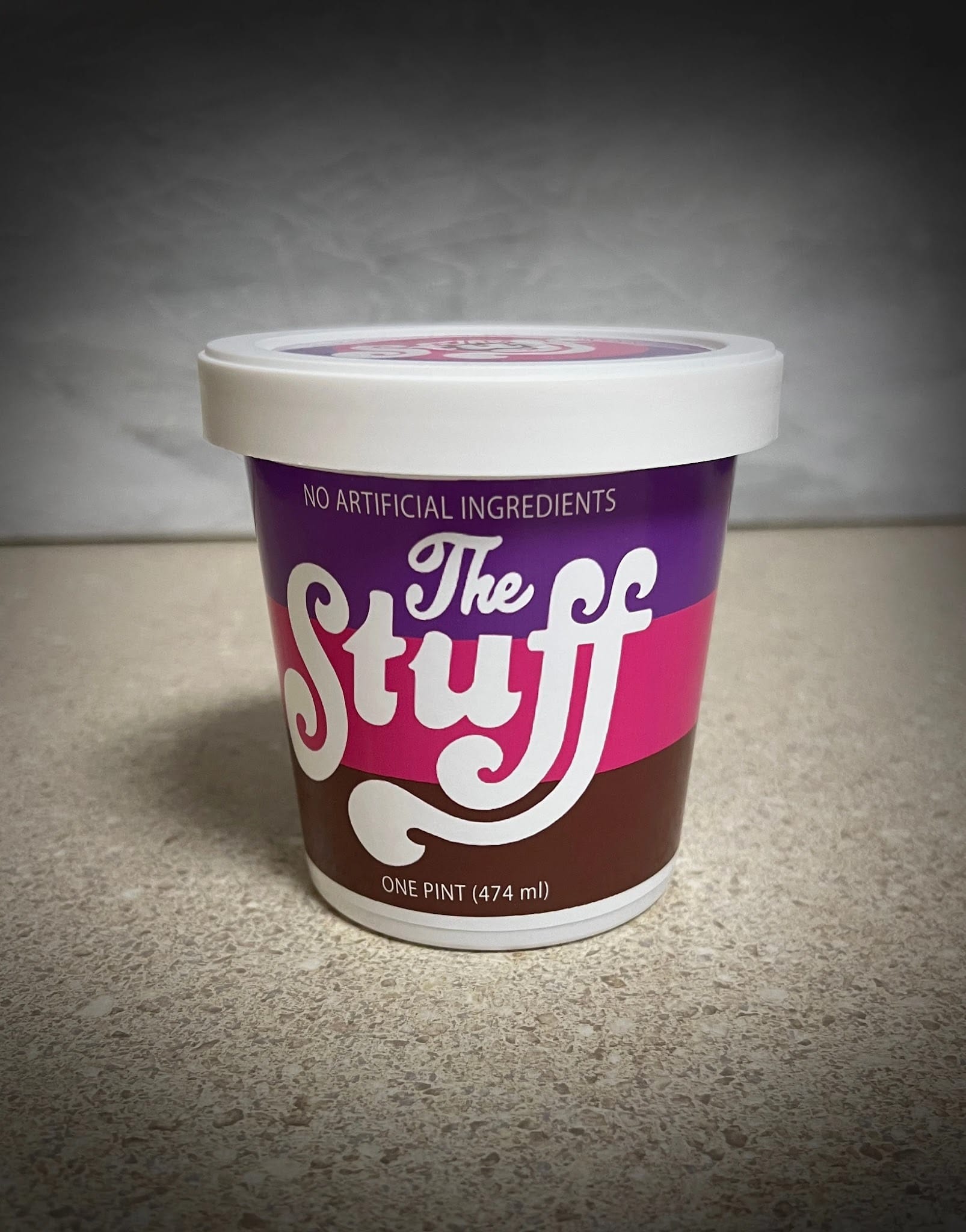
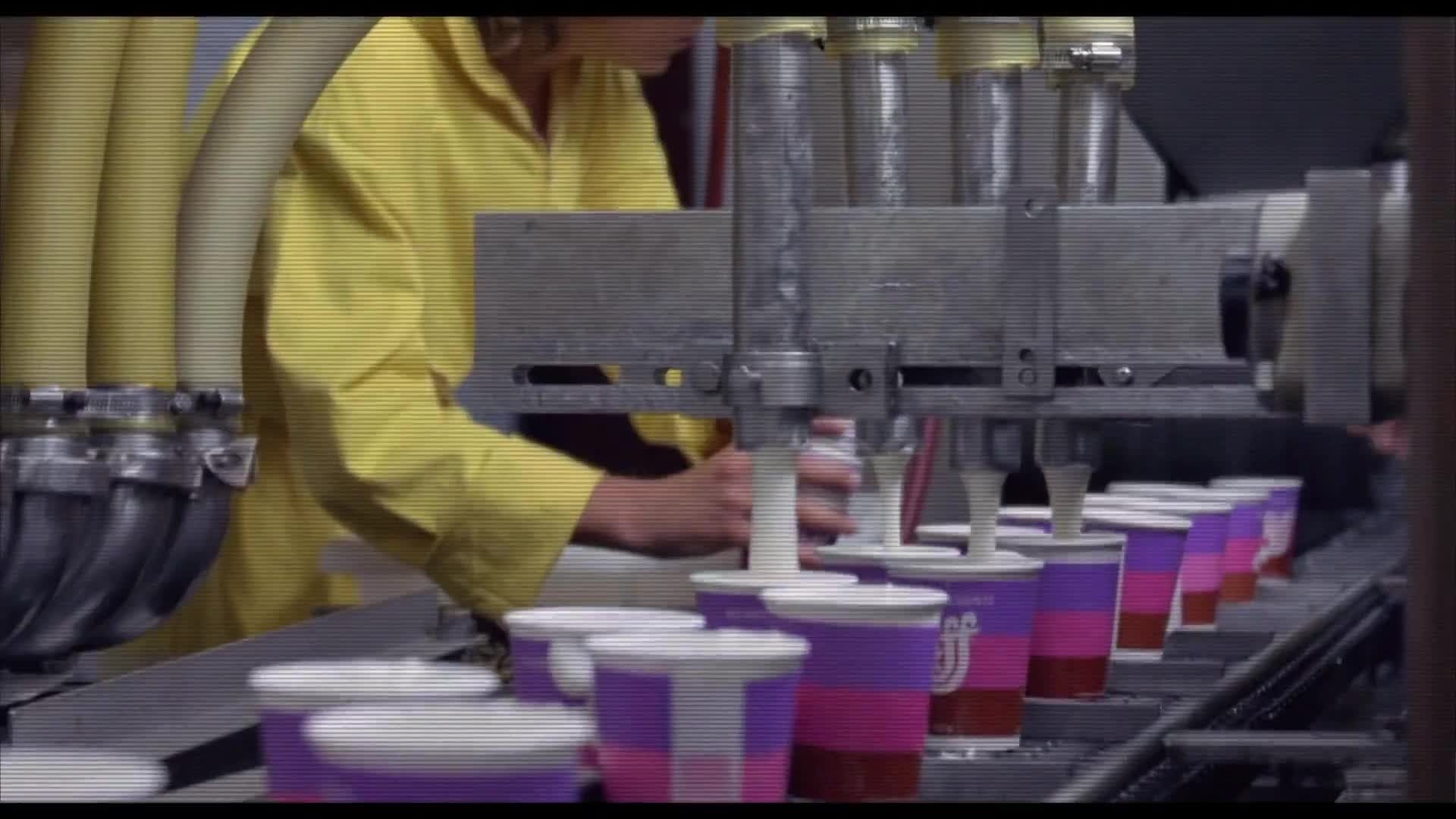
Like cups of The Stuff appearing in every grocery store Everytown, USA, ChatGPT and its analogues seemingly appeared on all of our browsers overnight, with their blank white chat boxes innocuously inviting our prompts, no matter how ludicrous or morally gray. It offered "the answers" with an obsequious, exclamation-point-ridden voice, too, like there was nothing wrong with asking. So everyone signed up for it. Everyone gave OpenAI their email address, clicked “Agree” on the User Agreement, and spent an afternoon asking it to write emails to their bosses in the voice of JRR Tolkien. The novelty wore off after a few days, of course. That much is well-documented.
But what happened to us when we swallowed all that Stuff? What did we give to it in return for the magical feeling of seeing some “content” just appear on our screens after even the nudgiest of prompts? What did we admit into our collective understanding, and what did it get from us?
I don’t just want to sit here popping off rhetorical questions into the void, so let me offer this: LLMs are The Stuff of the ‘20s. A massive, ever-growing blob that aims to extract more than it produces, to control more than it is controlled, and to appear as a harmless consumer treat that everyone likes and everyone wants to nibble on just a bit every day. This product aims to displace human consciousness and decision-making, encouraging us to become more and more dependent on its inscrutable processes and motivations.
I only wish that it was an alien life form. I only wish that no one could understand what it wants or where it comes from.
Alas, The New Stuff isn’t bubbling out of the ground. It’s worse. It’s bubbling out of the “connected” world that the Ellisons and Zuckerbergs have so effectively wrought; the slop oozes from every once-fertile plot on the web. And, as a teacher, I can’t help but get a whiff of it from every open laptop in my classroom.
One day, we’ll figure out that it’s bad for us. Just like the kid in the movie.